Have you ever felt your phone buzz in your pocket, only to pull it out and realize it was just a phantom vibration? We are so plugged into the digital grid these days that our brains literally make up notifications. That is why walking into the wild with everything you need on your back is the ultimate reset.
Think of it like clearing the cache on your computer. Multi-day backpacking is more than just hiking. It is an entry into a completely different state of mind where your only worries are clean water, a warm sleeping bag, and the next ridge. If you are ready to trade screen time for trail time, long-distance trekking is the gold standard of adventure.
Why Multi-Day Backpacking Defines True Adventure
There is a massive difference between a day hike and a multi-day trek. On a day hike, you always have one foot in the civilized world. You are thinking about the drive home, the dinner you will order, or the emails waiting in your inbox.
When you camp in the backcountry, those distractions evaporate. By day three, the rhythm of the trail takes over. Your feet find a steady pace, your breathing syncs with your steps, and the constant mental chatter finally quietens down.
This is immersive wilderness trekking. It demands self-reliance, physical stamina, and a willingness to embrace whatever weather comes your way. But the payoff is unmatched. You get to see sunrises over pristine alpine lakes, walk through valleys untouched by roads, and experience a level of quiet that is impossible to find in daily life.
The Majesty of the High Sierra and Beyond
California has some of the most dramatic mountain terrain on the planet. Although the John Muir Trail gets all the fame, routes like the Sierra High Route offer a much more rugged, off-trail experience. You will deal with massive elevation gains and loose granite passes that require actual navigation skills. It is tough, beautiful, and highly rewarding.
If you want that classic alpine experience without the nightmare of competitive permit lotteries, look slightly north to the Trinity Alps Wilderness.¹ The Trinity Alps are a fantastic, less-crowded alternative to the Sierra Nevada, featuring soaring granite peaks and pristine glacial lakes.
Another incredible option is the Wind River Range in Wyoming, which offers jagged peaks and massive glaciers.² The best part about the "Winds" is that most of the Bridger-Teton Wilderness does not require permit reservations for backpacking. This makes it perfect for last-minute planners who still want world-class alpine scenery.
When you are camping in these high-altitude environments, campsite selection is your most important safety tool. Here are a few golden rules for remote trail camping
• Look up: Always inspect the tree canopy before pitching your tent to avoid dead branches that could fall during high winds.
• Avoid water edges: Camping right next to a lake is tempting, but these spots are colder, damp, and attract bugs. Pitch your tent at least 200 feet away from water.
• Embrace the breeze: Set up your tent so the vents align with the wind to prevent internal condensation.
European Alpine Grandeur and Beyond
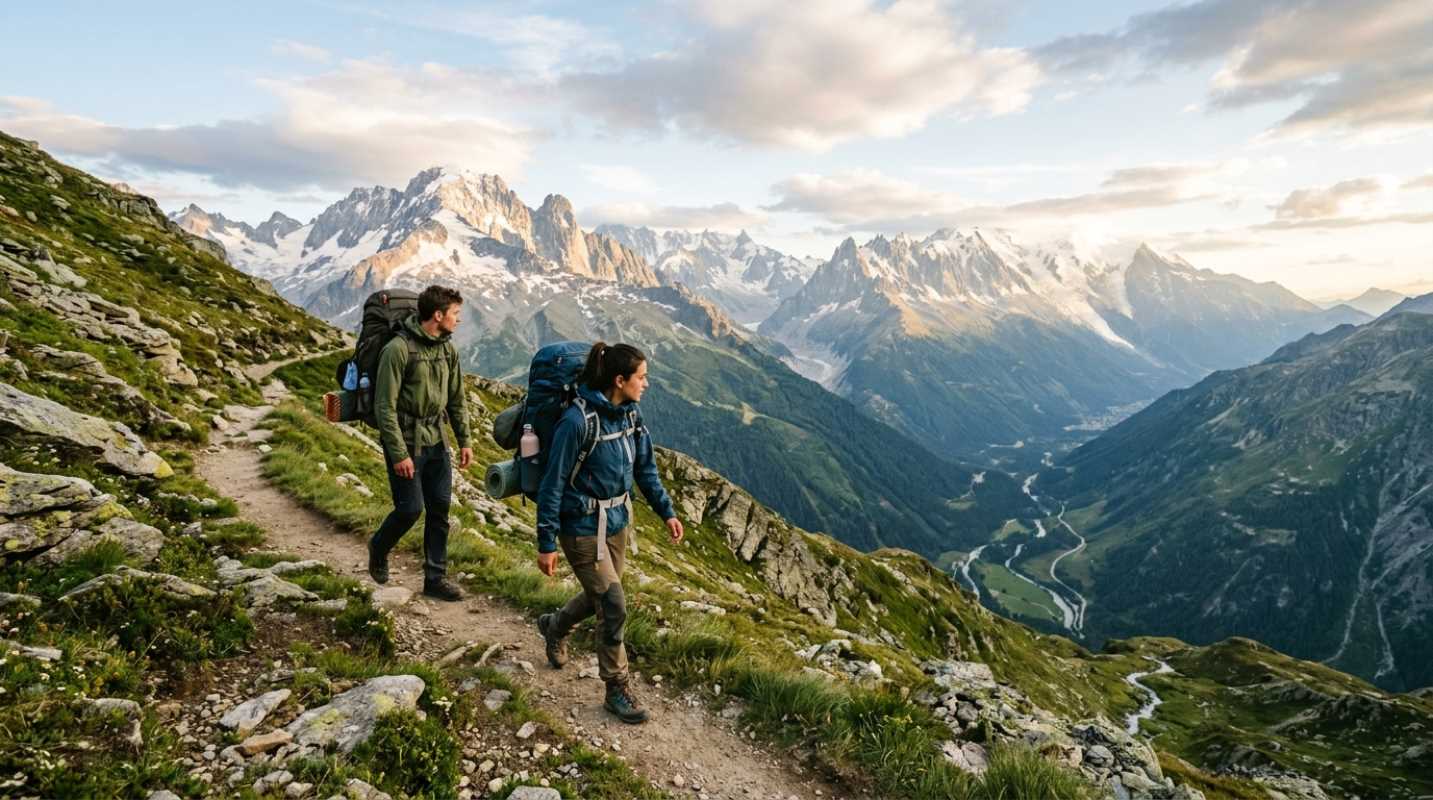
What if you want jaw-dropping alpine views but also want a warm pastry and a glass of wine at the end of the day? That is where the European style of trekking comes in. The Tour du Mont Blanc is the ultimate example, taking you through France, Italy, and Switzerland.
Instead of carrying a heavy tent and a week of freeze-dried meals, you can hike from hut to hut. You sleep in comfortable mountain refuges and eat hot meals prepared by hosts. It is a completely different vibe than North American wilderness trekking, focusing as much on local culture as physical endurance.
If you want something international but much more wild, the Laugavegur Trail in Iceland is a global favorite. This 34-mile trail connects the rainbow-colored mountains of Landmannalaugar to the green valley of Thórsmörk. You will walk past active volcanoes, massive glaciers, and black sand deserts. Just make sure to book the mountain huts early, as they often sell out a year in advance.
Untamed Wilderness on the Coast
Maybe alpine peaks are not your thing. What about the raw power of the ocean? The West Coast Trail on Vancouver Island in Canada is a legendary coastal route that will test your limits. This is not a casual walk on the beach. You will climb dozens of massive wooden ladders, slog through deep mud, and track tide tables to avoid getting trapped by the rising ocean.
For a similar Pacific Northwest vibe, the Wonderland Trail around Mount Rainier in Washington is a premier 93-mile loop.³ It takes you through temperate rainforests, wildflower meadows, and glacial valleys. It is physically demanding, with roughly 23,000 feet of elevation change.
These damp, coastal environments require specialized gear. Wet gear is heavy gear, so keeping your sleep system dry is a matter of safety.
• Pack liners: Use a heavy-duty trash bag inside your backpack to keep your sleeping bag and dry clothes completely waterproofed.
• Trekking pole tents: Shelters like the Durston X-Mid 2 are highly rated for getting the most from interior space while keeping weight under 2.5 pounds.
• Synthetic insulation: Consider a synthetic jacket or sleeping bag, which still retains some warmth if it gets damp, unlike traditional down.
Preparation and Mindset for Success
You cannot just roll out of bed and tackle a 50-mile wilderness trek. Success on these routes requires careful physical conditioning and smart logistics. Start training months in advance by walking with a weighted pack to get your legs and joints used to the load.
Logistics can be just as tough as the trail itself. With the massive popularity of outdoor recreation, securing permits is a major hurdle. Use the "Plan A, B, and C" approach. When trying to secure walk-up permits at a ranger station, arrive early and have three different route options ready. If your first-choice trail is fully booked, a ranger can quickly approve your backup plan.
Top Recommendations
Having the right gear makes a massive difference. The backpacking community has fully embraced lightweight gear to reduce physical strain. Here is a quick checklist of expert-approved gear for your next trip
• Backpacks: The Gregory Paragon 60 or Maven 58 are excellent for carrying heavy loads comfortably. For an ultralight option, the Durston Kakwa 55 is a favorite among long-distance hikers.
• Water filtration: The Sawyer Squeeze or Platypus QuickDraw are the industry standards for fast, reliable filtration.
• Shelters: Double-wall trekking pole tents keep your pack light without sacrificing weather protection.
Finally, always practice Leave No Trace principles. Carry a lightweight trowel and dig a cathole six to eight inches deep for human waste, keeping it at least 200 feet from water sources. In fragile alpine or desert environments, you must pack out your used toilet paper.
Choosing Your Next Epic Journey
Ready to take the plunge? If you are new to multi-day trekking, do not start with a grueling off-trail route. Pick a shorter two-night trip close to home to test your gear and build your stamina.
Something is life-changing about spending days in the deep woods. You will come back with stronger legs, a clearer mind, and a renewed appreciation for the simple things (like a hot shower).
Do not let another year slip by just thinking about it. Grab a map, research the permit opening dates, and start planning your next great adventure today.
Sources:
1. Trinity Alps Wilderness Backpacking Guide
https://www.cleverhiker.com/backpacking/trinity-alps-wilderness-backpacking-guide/
2. My Top 10 Favorite Backpacking Trips
https://thebigoutside.com/my-top-10-favorite-backpacking-trips/
3. 8 Iconic Pacific Northwest Backpacking Trips
https://www.cleverhiker.com/backpacking/8-iconic-pacific-northwest-backpacking-trips/